Advent calendar
AdventskalenderCustomHandmade calendars from the mid-19th…
The Advent calendar grew out of German homes in the 19th century and reached print in Hamburg and Munich in 1902 and 1903, and anyone in Europe in December can open one, from a paper card to a whole town hall in Gengenbach. Its inventor is a matter of dispute, since two publishers have a claim and the calendar with doors came later than both.
Families counted the days themselves before anything was printed. The German Wikipedia dates a probably handmade calendar of 24 pictures on a wall to a Protestant household in 1851, and Catholic families laid a straw in the crib for each day. Thomas Mann's Buddenbrooks describes a tear-off calendar that the children's nanny makes, in a scene the German Wikipedia dates to 1869.
The Hamburg bookseller Friedrich Trümpler printed a Weihnachtsuhr in 1902. It was a clock face with fields for 13 to 24 December and a hand you moved on each day. Gerhard Lang of the Munich printer Reichhold & Lang published Im Lande des Christkinds, which came as a sheet of 24 pictures to cut out and stick into 24 fields, and the sources date it to 1903, 1904 or 1908. Esther Gajek's study Adventskalender von den Anfängen bis zur Gegenwart (Munich, 1988) is the standard work on the subject. Calendars with windows to open spread only after 1920, so Lang counts as an early publisher of the printed calendar.
The Nazi party's propaganda office issued an Advent calendar called Vorweihnachten that sold from 1942 to 1944, and versions of it were reprinted in West Germany as late as 1982. After the war the US authorities gave Richard Sellmer Verlag in Stuttgart a licence in 1945 to print 50,000 calendars, and its first calendar was Die kleine Stadt by Elisabeth Lörcher, which came out in 1946 in English and Swedish as well as German. The first chocolate calendar went on sale in 1958, according to the one source the German Wikipedia gives for it.
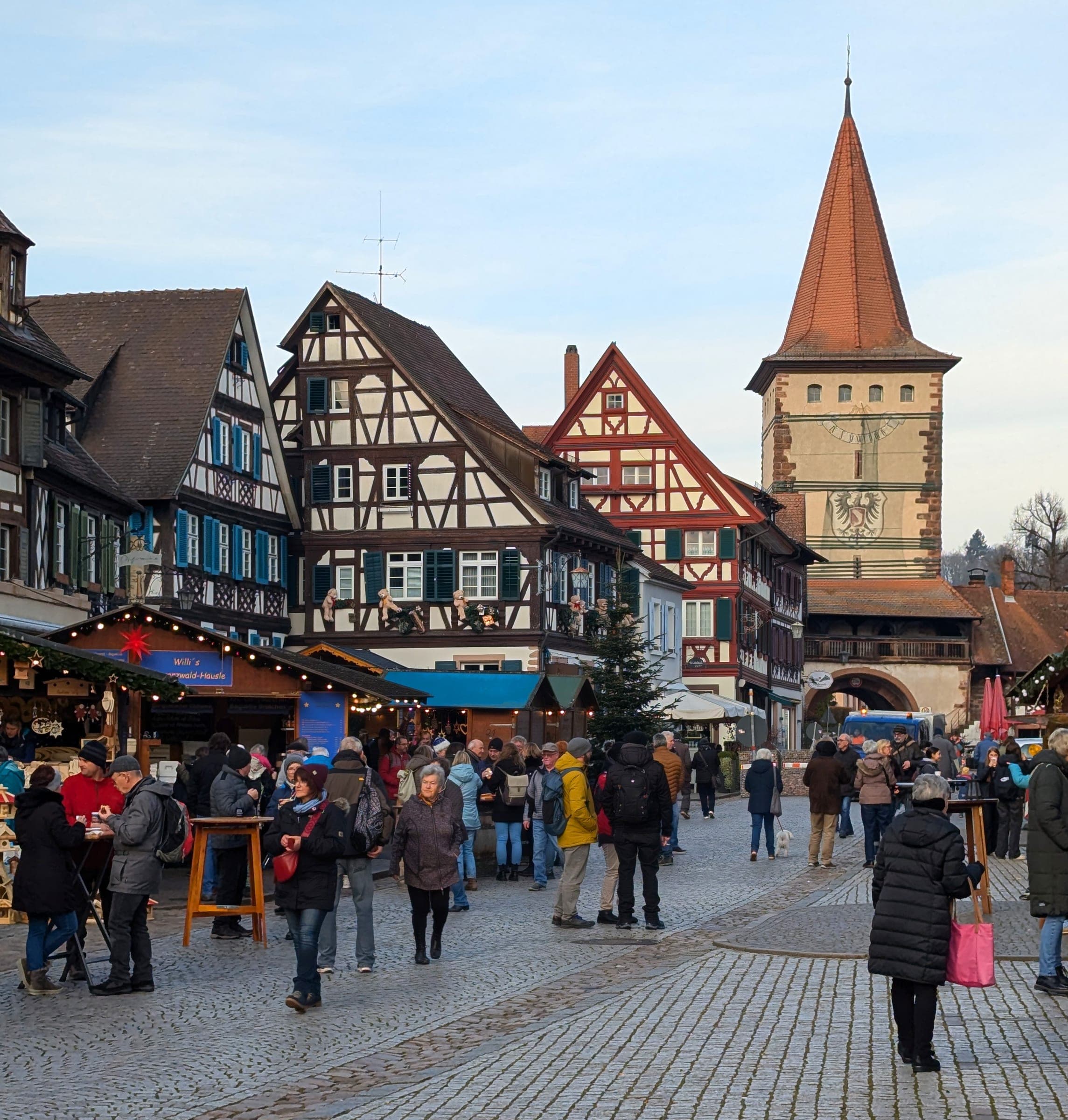
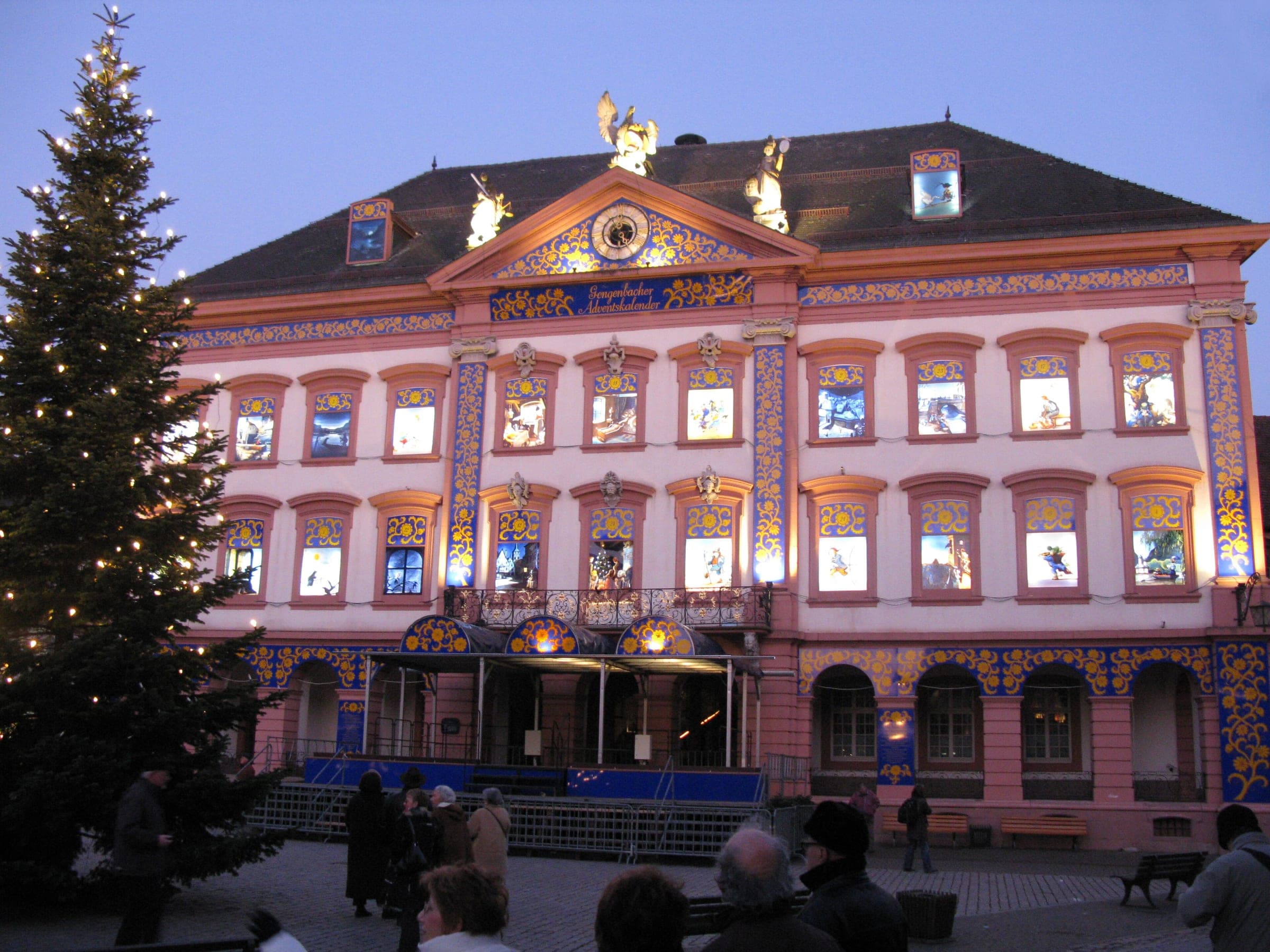
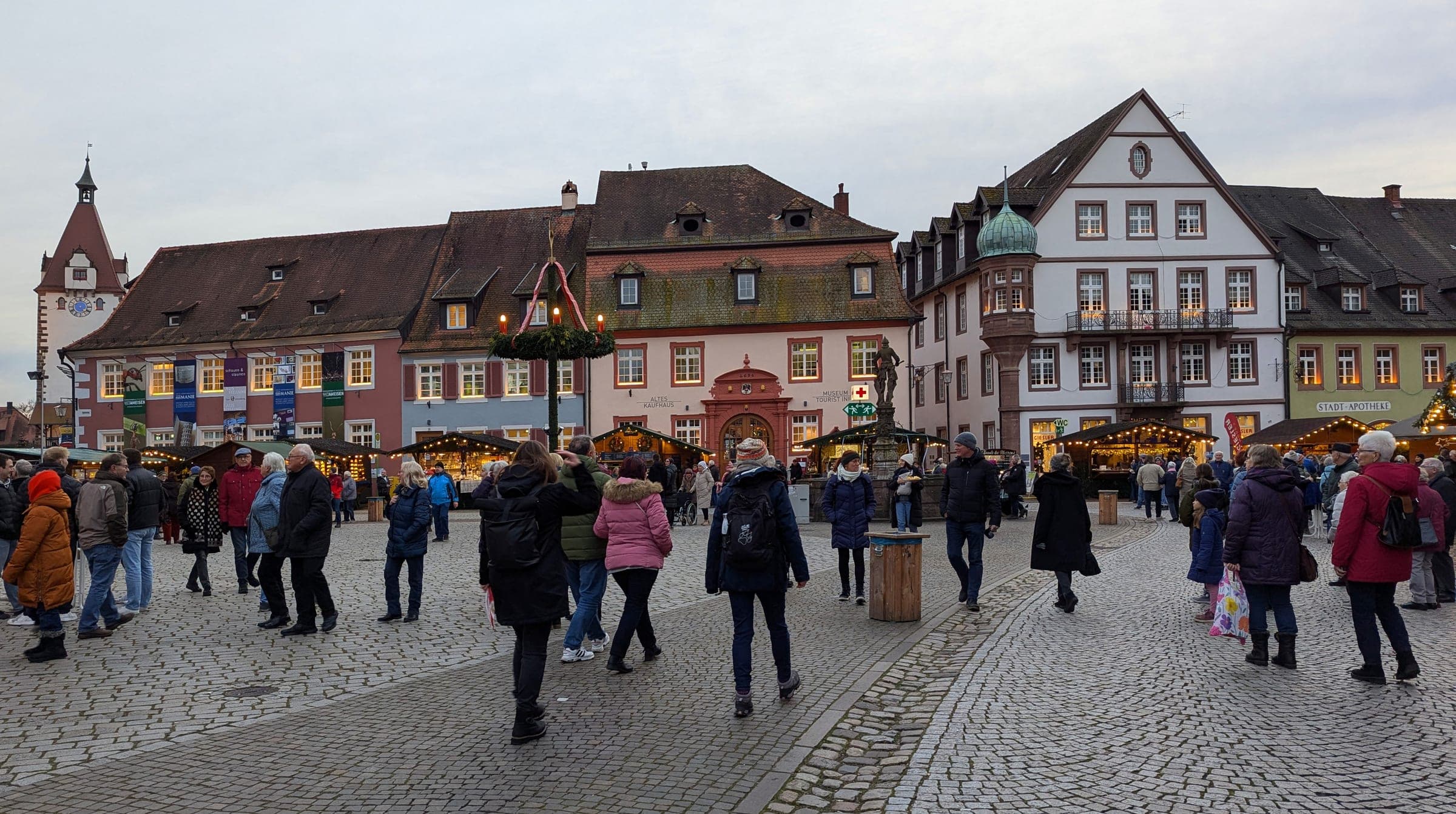
Gengenbach in the Black Forest turns the 24 windows of its Rathaus into an Advent calendar, with one window revealed each evening at 18:00. The pictures in the windows are commissioned work by invited artists, and Marc Chagall and Andy Warhol have featured. The event page carries this year's dates.
Worth knowing
- Be on Gengenbach's market square a few minutes before 18:00 if you want to see a window opened, since the crowd is thickest right at the hour.
- The German Christmas Museum in Rothenburg ob der Tauber shows Advent calendars a century old if you want to see Lang's kind of printed sheet in person.
Quick answers about Advent calendar
Who invented the Advent calendar?
Nobody can claim it alone, since German families made their own calendars through the 19th century. The first printed ones came from Friedrich Trümpler in Hamburg in 1902 and from Gerhard Lang in Munich, whose calendar the sources date to 1903, 1904 or 1908.
When did Advent calendars get chocolate?
The first Advent calendar filled with chocolate went on sale in 1958, according to the single source the German Wikipedia cites for it.
Where is the giant Advent calendar house in Germany?
The best-known Advent calendar house is the Rathaus in Gengenbach in the Black Forest, where one of 24 windows is revealed each evening at 18:00 through Advent.